 |
|
|
|
|
|
|
|
|
|
|
|
|
|||||||||
 |
graphic standards | ||||||||||||||||||||
   |
 |
|
|||||||||||||||||||
|
|
||||||||||||||||||||
The Topology of Objecthood |
|||||||||||||||||||||
|
|
An abstract of Rebecca Duclos’ Ph.D thesis |
|||||||||||||||||||
|
 |
||||||||||||||||||||
|
|||||||||||||||||||||
|
|||||||||||||||||||||
|
|||||||||||||||||||||
|
|||||||||||||||||||||
|
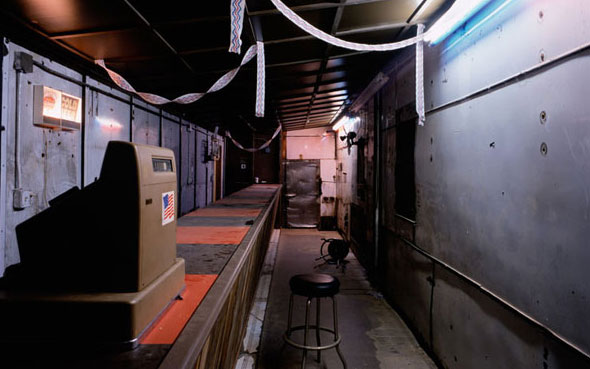
Mike Nelson's "A Psychic Vacuum” in New York City, 2007. Image: Charlie Samuels |
||||||||||||||||||||
|
Forty years after the writing of “Art and Objecthood,” my thesis presents an alternative idea of objecthood that moves from Michael Fried’s original association of the concept with the objects of literalist (minimalist) art to an idea of objecthood as a field (of both vision and action). The potential for objecthood to be separated from Fried’s attendant term “theatricality” inspires an intensive re-reading of Fried’s short passage concerning Tony Smith’s night time drive along the New Jersey Turnpike. Through a series of arguments, I attempt to re-position the Smith story as a model not of the minimalist gallery experience (as it became for Fried) but as a model of the contemporary experience of urban landscape that I discuss in terms of the “sublime picturesque.” This is a topological model of encounter that moves beyond Fried’s interest in singular art objects and their viewing subjects to develop, instead, a notion of a mobile, immersive, and responsive subjecthood emerging peripatetically in relation to the objecthood of landscape—to space as a Kantian “object devoid of form.” I also argue that objecthood as a spatial construct was, in fact, at the centre of other significant (non-minimalist) aesthetic practices active in the 1960s and 1970s. The approaches, experiments, and postures of especially situationist and postminimalist incursions into “the field of encounter” provide the base from which an arc is drawn connecting this “other” objecthood of the 1960s to the sublime picturesque experimentations of contemporary artists, Martha Fleming, Lyne Lapointe, Mike Nelson, and Janet Cardiff who have been working since the 1980s. In the process of repositioning a post-Friedian idea of objecthood in terms of landscape—in terms of what it means to experience space as both a “thing” and an “event” that may have potentially profound effects—I also attempt to re-position a post-Kantian idea of the sublime that draws particularly upon feminist approaches which stress the dynamic suspension of one’s subjecthood within the “incomprehensible materiality” of experience. |
||||||||||||||||||||
|
|||||||||||||||||||||
|
|||||||||||||||||||||
|
|||||||||||||||||||||
|
|||||||||||||||||||||
|
|||||||||||||||||||||
|
|||||||||||||||||||||
|
|||||||||||||||||||||
|
|||||||||||||||||||||
|
|||||||||||||||||||||
| Above Left: Tony Smith's Kline Knot drawing, 1963. |
|||||||||||||||||||||
 |
|||||||||||||||||||||

